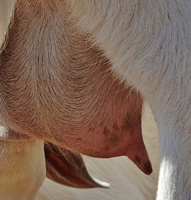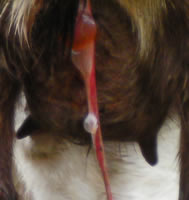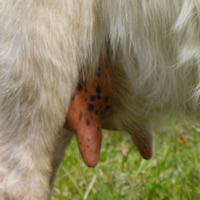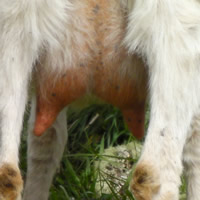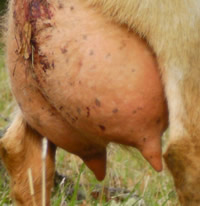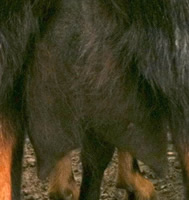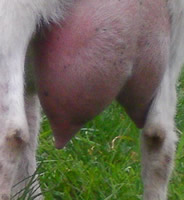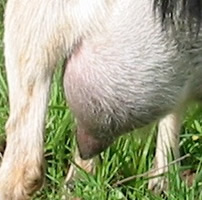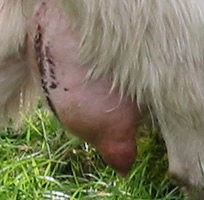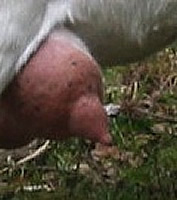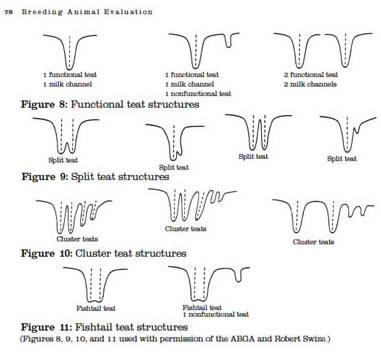
OUR UDDER SCORING SYSTEMThe dairy influence of the Kiko breed provides the high milk production needed to wean large kids. Unfortunately, the typical dairy goat udder is not the ideal meat goat udder. Certain udder characteristics cause serious problems for low-input meat goat producers. While large, bulbous teats are not a problem for dairy producers, kids cannot nurse distended teats, and the management needed to milk out problem does is cost-prohibitive. Large, pendulous udders drag and catch on blackberries, inhibiting the does' search for food. Our farm is a proving grounds for udder quality. The nearby Willamette Valley floor produces much of the world's grass seed, as it is ideal for cool-weather grasses. However, our climate causes a springtime grass flush that boosts milk production, leading to blown udders in susceptible goats. 25% of our foundation animals had udder problems upon arrival here, despite having had no difficulties in their previous, drier California location. We insist on two clean teats only. We have heard the arguments for allowing a third or fourth extra teat to support multiple kids. However, in our experience, the limiting factor in raising multiples is total milk production, not number of teats. More importantly, extra teats appear to be strongly associated with teat defects such as split or fish teats. We have found that if a kid has even one small non-functional extra teat, there's more than a 50% chance that kid also has split or fish teat. It just doesn't seem feasible to breed for (or tolerate) three or four functional teats without also increasing teat defects. Through rigorous culling, we have dramatically increased the quality of our udders over the last 13 years. We score all does for udder at kidding. Herdsire dams have multi-year records of good udder performance under our conditions.
|